


So, you are looking forward to becoming a Java Developer extraordinaire!!
This means you know how rewarding a career can be in this domain. Let us have a look at some significant reasons for becoming one.
Extraordinary Facts
- The worldwide task management market was estimated at USD 1.7 billion this year and is expected to reach USD 4.5 billion by the year 2026
- The full-stack development industry is expected to grow with a CAGR of a massive 13%
- Top companies like Google, Amazon, Microsoft, Facebook, Accenture, and TCS are looking for Java Full Stack Developers.
- Moreover, they are ready to pay huge salaries to the skilled, trained, certified Developers.
- The skill gap is still widening, and the demand for full-stack developers is increasing by 30%.
- As per Glassdoor, the average annual salary of a Full Stack Developer at mid-career is around INR 6,80,000
The facts mentioned above clearly state that a career in Full Stack Development can be lucrative and promising. You can take a Full Stack Java Developer Course in Pune to get certified and land a great job in web development.
Let us explore how you can become a full-stack Java Developer.
What is a Full Stack Java Developer?
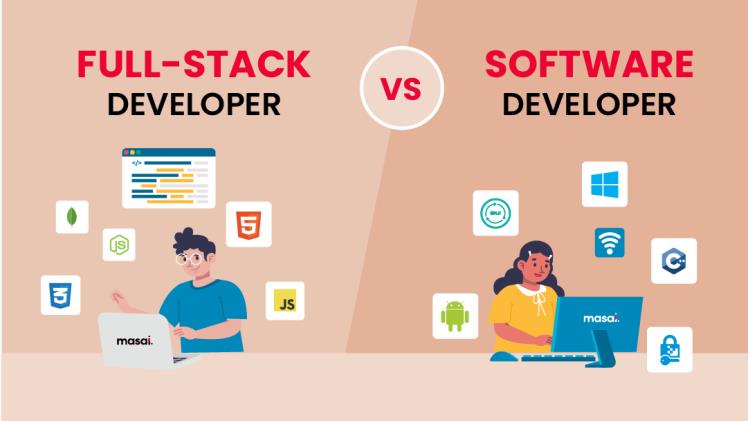
A Full-Stack Developer is an umbrella term for professionals who can develop web applications. With technology seeping into every aspect of life, web applications and websites have become integral. However, creating a fully-fledged website is not everyone’s cup of tea and requires a specific skill set.
The professionals who can develop these fully functional websites are termed Full Stack Developers. A full-stack developer is a professional who can design the front end (the part of a website that appears to the users), develop the back end (provides functionality to the front end), and integrate it with other elements to create an effective and efficient website.
So, the front end includes all the visible features to the user. Backend frameworks include what happens behind the scenes.
So, a full-stack developer has to master the front end, back end, and data processing techniques.
How to Become a Full-Stack Java Developer
1. Learn the Basics
- Master core Java concepts, including syntax, data types, and control structures.
- Understand Object-Oriented Programming (OOP) principles.
2. Front-End Technologies
- Acquire proficiency in HTML, CSS, and JavaScript.
- Explore popular front-end frameworks like Angular, React, or Vue.js.
With the front end, you must add impressive elements such as animations, graphics, images, layouts, and content navigation.
3. Back-End Development
- Learn server-side programming with Java, focusing on frameworks like Spring or Java EE.
- Understand RESTful API design and implementation.
While working with the back end, you need to emphasize building the code and architecture of the website. It also includes database management, APIs (Application Programming Interface), and troubleshooting the application or website.
4. Database Knowledge
- Gain expertise in working with databases, particularly SQL and JDBC.
- Explore ORM (Object-Relational Mapping) tools like Hibernate.
5. Version Control
It’s important to become acquainted with version control systems like Git.
6. Build Tools
Learn to build tools like Maven or Gradle for project management and automation.
7. Full Stack Frameworks
Explore full-stack frameworks like Spring Boot for streamlined development.
8. Cloud Services
Understand cloud platforms like AWS or Azure for deployment and scaling.
9. Testing
- Master unit testing with JUnit and integration testing.
- Explore tools like Selenium for automated testing.
10. Continuous Integration/Continuous Deployment (CI/CD)
Implement CI/CD pipelines for automated testing and deployment.
11. Versioning and Collaboration
With a version control system, you can keep track of the changes made over time and take steps accordingly.
- Use tools like GitHub for version control and collaborative development.
12. Stay Updated
Keep abreast of industry trends, new technologies, and updates in the Java ecosystem.
13. Build a Portfolio
Showcase your projects on platforms like GitHub to demonstrate your skills.
14. Networking
Join developer communities, attend meetups, and participate in forums.
15. Gain Real-world Experience
Work on real projects or contribute to open-source projects to enhance practical skills.
16. Get Trained
You can gain practical experience by enrolling in an online training course. Simplilearn’s online training course allows you to work on Capstone projects using real-world data. This way, you can work with all the front-end and back-end technologies and master the required concepts. By acquiring the skills needed, you can revolutionize web development.
By following these steps, you can build a solid foundation and stay competitive in the dynamic tech industry.
Key Soft Skills Required to Become a Full-Stack Developer
Some of the most crucial soft skills required to become a Full Stack developer include:
- Creativity: You should comprehend the project’s goals and craft a product that captivates the intended audience.
- Strategic Planning: A pivotal stage in the development life cycle, you need the capability to strategically plan design, development, and implementation phases, optimizing the entire process.
- Analytical Skills involve precise information analysis and making informed, data-driven decisions, evolving through exposure but requiring a solid foundational understanding.
- Problem-Solving Skills: Essential for anticipating errors and creating bug-free applications, these skills are vital for seamless task execution from a business standpoint.
- Time Management Skills: Meeting deadlines while ensuring effective task execution is imperative for developers to maintain efficiency in project delivery.
Become a Full Stack Java Developer Extraordinaire Today!
Now that you have gone through what you need to excel as a Full-Stack Developer, you must take just one step. Enrollment in an online training course from an ed tech giant, Simplilearn, does it all. It delivers training from industry experts and allows you to learn at your own pace. It ensures you get hands-on practice with all the tools and technologies required to start building your applications.
