


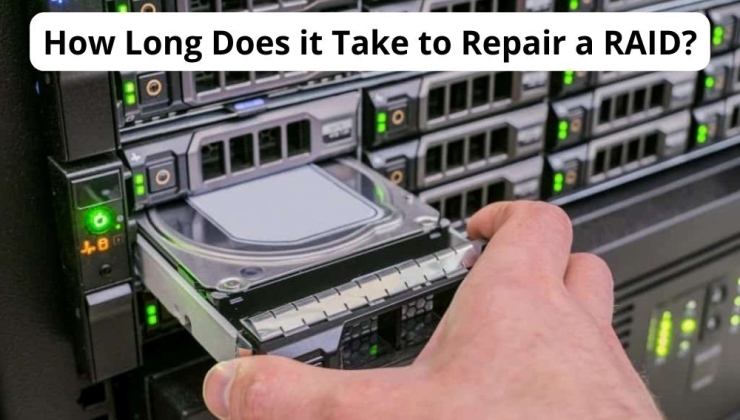
RAID, or Redundant Array of Independent Disks, is a data storage technology that combines multiple disk drives to provide increased performance, redundancy, and fault tolerance. RAID systems are widely used in enterprise environments, data centers, and critical applications where data integrity and availability are paramount.
RAID offers several benefits, including improved data protection against disk failures, enhanced read/write performance, and increased storage capacity. By distributing data across multiple disks, RAID systems can tolerate one or more disk failures without losing data, ensuring business continuity and minimizing downtime.
Despite the redundancy provided by RAID, disk failures or data corruption can still occur, necessitating a RAID repair process. Disk failures can be caused by various factors, thepressedge such as mechanical issues, firmware bugs, power surges, or age-related wear and tear. Data corruption, on the other hand, can result from software errors, hardware malfunctions, or other underlying issues.
Factors Affecting RAID Repair Time
The RAID level plays a significant role in determining the repair time. Different RAID levels offer varying degrees of redundancy and employ different data distribution and parity calculation methods, which can impact the repair process.
- RAID 0 is a non-redundant configuration that distributes data across multiple disks for improved performance but offers no fault tolerance. If a single disk fails in a RAID 0 array, data loss is inevitable, and repair is not possible.
- RAID 1 creates an exact copy (mirror) of data on two grindrprofiles or more disks. In case of a disk failure, the remaining disks can provide the data, and the repair process simply involves replacing the failed disk and rebuilding the mirror.
- RAID 5 distributes data and parity information across all disks in the array. If a single disk fails, the missing data can be reconstructed from the remaining disks using the parity information. The repair process involves replacing the failed disk and rebuilding the parity data.
- RAID 6 is similar to RAID 5 but uses two sets of parity data, providing fault tolerance for up to two disk failures. The repair process is more complex and time-consuming than RAID 5, as it involves reconstructing data from the remaining disks and both parity sets.
- There are other RAID levels, such as RAID 10 (a combination of RAID 1 and RAID 0), RAID 50 (a nested RAID level combining RAID 5 and RAID 0), and RAID 60 (a nested RAID level combining RAID 6 and RAID 0), each with its own repair characteristics.
The number of disks in the RAID array can significantly impact the repair time. Generally, the more disks in the array, the longer it takes to rebuild or reconstruct the data, as the process involves reading and writing data across multiple disks.
The capacity and speed of the disks in the RAID array also play a role in determining the repair time. Larger disk capacities and slower disk speeds can result in longer repair times, as more data needs to be processed and transferred during the rebuild process.
The performance of the RAID controller and the host system can also affect the repair time. High-performance RAID controllers with dedicated processors and cache memory can significantly accelerate the rebuild process, while slow or outdated controllers may bottleneck the repair process.
Most modern RAID systems support automatic rebuild, where the RAID controller detects a failed disk and initiates the repair process automatically. However, some older or entry-level systems may require manual intervention, potentially increasing the repair time due to human involvement.
Hardware RAID solutions, which use dedicated RAID controllers, generally offer faster repair times compared to software RAID implementations that rely on the host system’s resources. Hardware RAID controllers are designed specifically for RAID operations and can offload the rebuild process from the host system, resulting in better performance.
RAID Rebuild Process
The first step in the raid repair software process is detecting the failed disk. RAID controllers continuously monitor the health of the disks in the array and can detect failures through various mechanisms, such as SMART (Self-Monitoring, Analysis, and Reporting Technology) monitoring, parity checks, or other diagnostic tools.
Once a failed disk is identified, a replacement disk must be procured and prepared for integration into the RAID array. This may involve formatting, partitioning, or initializing the new disk to ensure compatibility with the existing RAID configuration.
After the replacement disk is ready, the RAID controller initiates the rebuild process. Depending on the RAID level and configuration, this may involve reconstructing the data from the remaining disks and parity information, or simply copying data from a mirrored disk.
RAID controllers can perform the rebuild process in two ways: sequential or background. A sequential rebuild reads and writes data sequentially, maximizing the repair speed but potentially impacting system performance during the process. Conversely, a background rebuild interleaves the rebuild process with regular I/O operations, minimizing the impact on system performance but potentially taking longer to complete.
Estimated Repair Times for Common RAID Configurations
- RAID 1 typically has the fastest repair time among redundant RAID levels. Since data is mirrored across disks, the repair process only involves copying the data from the remaining disk to the replacement disk. The repair time is primarily dependent on the disk capacity and speed, with larger and slower disks taking longer to copy the data.
- RAID 5 repair times can vary significantly based on the number of disks in the array, the disk capacity and speed, and the RAID controller performance. The repair process involves reading data from the remaining disks, calculating the missing data using the parity information, and writing the reconstructed data to the replacement disk. As a general estimate, repairing a RAID 5 array with four or more disks can take several hours to days, depending on the array size and system specifications.
- RAID 6 repair times are generally longer than RAID 5 due to the additional parity calculations required. The repair process involves reconstructing data from the remaining disks and both parity sets, which can be computationally intensive and time-consuming, especially for larger arrays with more disks.
- RAID 10 combines the strengths of RAID 1 (mirroring) and RAID 0 (striping). The repair time for a RAID 10 array depends on the number of disk failures and the specific configuration. If a single disk fails in a mirrored set, the repair process is similar to RAID 1 and relatively fast. However, if multiple disks fail across different mirrored sets, the repair process can be more complex and time-consuming.
Factors That Can Slow Down RAID Repair
If the RAID array is actively servicing I/O requests during the repair process, it can significantly slow down the rebuild time. The RAID controller must balance the rebuild process with regular read and write operations, potentially causing performance degradation and prolonged repair times.
If the disks in the RAID array contain errors, bad sectors, or other physical defects, the repair process can be hampered. The RAID controller may need to reallocate or remap these sectors, adding overhead and increasing the repair time.
Older or low-end RAID controllers may lack the processing power, cache memory, or other resources required for efficient RAID rebuilds, resulting in slower repair times, especially for larger arrays or higher RAID levels.
In the case of software RAID implementations or when the RAID controller relies heavily on the host system’s resources, factors such as CPU load, memory utilization, and other system activities can impact the repair time. Insufficient system resources can cause the rebuild process to compete with other workloads, leading to slower repair times.
Minimizing RAID Repair Time
Investing in a high-performance RAID controller can significantly reduce repair times, especially for larger arrays or higher RAID levels. Modern RAID controllers often feature dedicated processors, ample cache memory, and hardware-accelerated parity calculations, enabling faster rebuilds and reconstructions.
Utilizing faster disks, such as solid-state drives (SSDs) or high-performance hard disk drives (HDDs), can greatly improve RAID repair times. Faster disks have higher data transfer rates and lower access times, allowing the RAID controller to read and write data more efficiently during the rebuild process.
If possible, it’s recommended to minimize I/O operations during a RAID rebuild. This can be achieved by scheduling rebuilds during off-peak hours, temporarily offloading workloads to other systems, or implementing I/O throttling mechanisms to prioritize the rebuild process.
Some RAID controllers and storage solutions offer advanced features that can accelerate the repair process. For example, online capacity expansion (OCE) or dynamic disk sparing can reduce the time required for integrating new disks into an existing RAID array.
Best Practices for RAID Maintenance
While RAID provides redundancy and fault tolerance, it is not a substitute for regular backups. Implementing a robust backup strategy is crucial to protect against data loss in the event of multiple disk failures, RAID controller failures, or other catastrophic events.
Regularly monitoring the health of the RAID array and its components is essential for proactive maintenance and early detection of potential issues. RAID controllers often provide monitoring tools, logs, and alerts that can help identify problems before they lead to data loss or downtime.
To minimize the risk of data loss and reduce repair times, it’s recommended to proactively replace disks that show signs of impending failure, such as increasing error rates or SMART warnings. This can prevent multiple disk failures and ensure a smoother repair process.
Implementing the appropriate RAID level, selecting suitable disk types, and properly configuring the RAID system is crucial for optimal performance and reliability. Consulting with experts or following best practices can help ensure that the RAID setup meets the specific requirements of the application or workload.
Conclusion
The time required to repair a RAID array depends on various factors, including the RAID level, number of disks, disk capacity and speed, RAID controller performance, and the type of rebuild (automatic or manual). Hardware RAID solutions generally offer faster repair times compared to software RAID implementations. Factors such as ongoing I/O operations, disk errors, and system resource constraints can slow down the repair process.
Proper RAID implementation and management are essential for ensuring data integrity, availability, and minimizing downtime. Choosing the right RAID level, selecting appropriate hardware components, and following best practices can help optimize RAID performance and repair times.
While RAID provides redundancy and fault tolerance, it is not a substitute for regular backups and disaster recovery planning. Proactive maintenance, monitoring, and timely hardware upgrades can help mitigate the risk of data loss and reduce the time required for RAID repairs. Additionally, consulting with experts or following industry best practices can help organizations implement and manage RAID systems effectively, ensuring optimal performance and data protection.
